Living Tint
An Algae Pact for Living with Care
Living Tint is a living material design project centred on Haematococcus pluvialis, a microalga whose colour changes from green to red in response to environmental stress.
Through biological observation, cultivation experiments, and interactive prototyping, the project developed a living algae system that makes its changing condition visible and translates light, movement, temperature, and maintenance into everyday acts of care.
*The project began as a group collaboration with Yutong Hou, Zoey Wang, Yimeng Li, Huimin Du and Eva Yang, in which I led the research and design direction. The version presented here was substantially redeveloped by me.
Keywords
Living Materials
Microalgae Cultivation
Coding
Physical Prototyping
Role
Project Lead
Duration
2 Months

Haematococcus pluvialis
Haematococcus pluvialis is a freshwater green microalga known for its strong response to environmental change.
Under favourable conditions, it remains green and grows actively through photosynthesis. When exposed to stress, it alters its metabolism and accumulates protective pigments, creating a visible shift in colour and cellular structure.
This responsiveness makes it a useful living material for studying adaptation, interaction, and care.
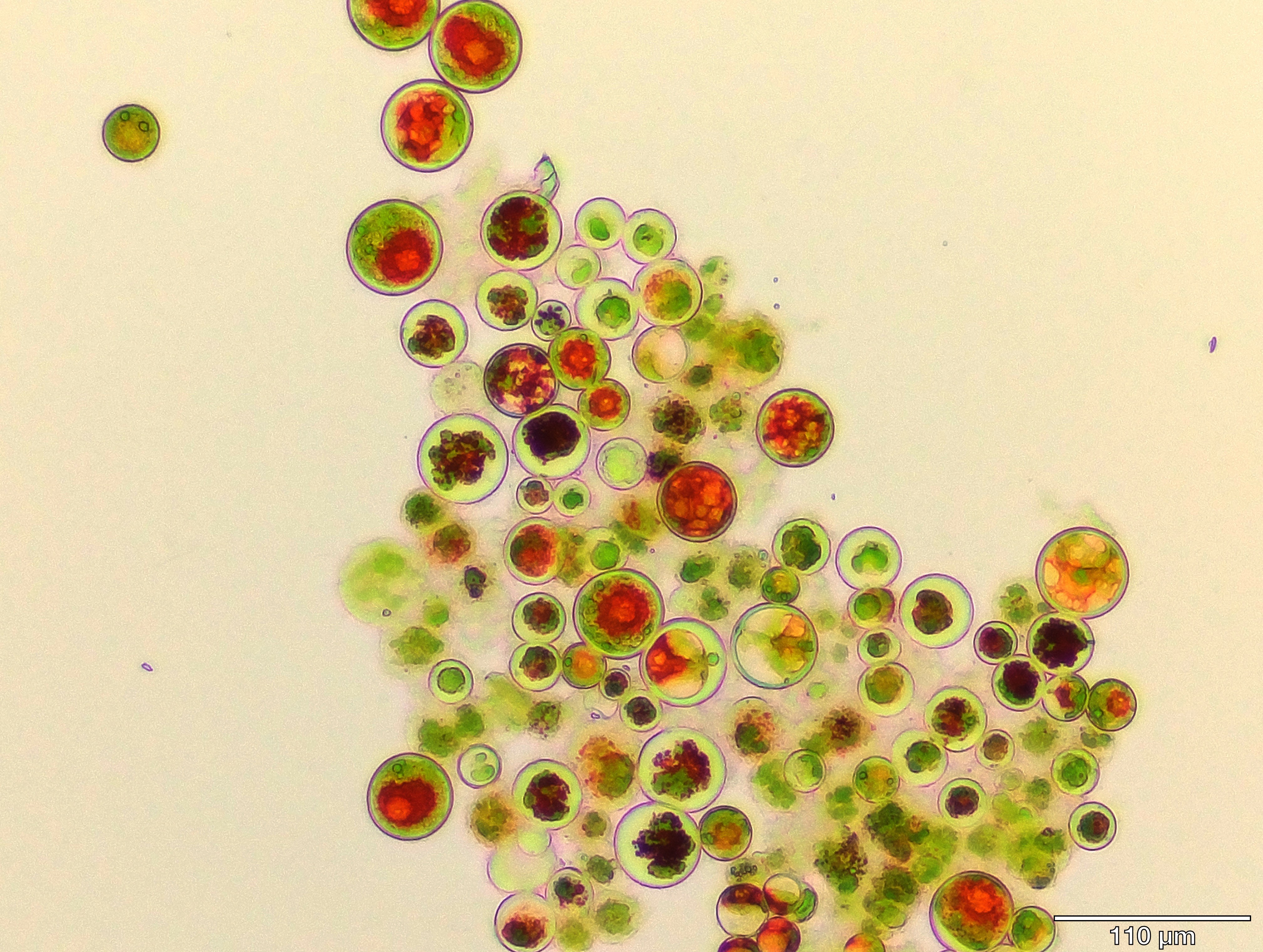

Green growth — the cells are green and actively growing
Stress begins — strong light or limited nutrients place the cells under stress
Colour transition — green chlorophyll decreases as orange-red pigments begin to accumulate
Protective transformation — the cells become orange-red, slow their growth, and develop thicker walls
Red resting stage — the cells turn deep red as they accumulate astaxanthin for protection
Reversible in response to environmental changes.
Cultivation Research
H. pluvialis was cultivated in BBM medium and distilled water, with changes monitored through spectrophotometry and microscopy.
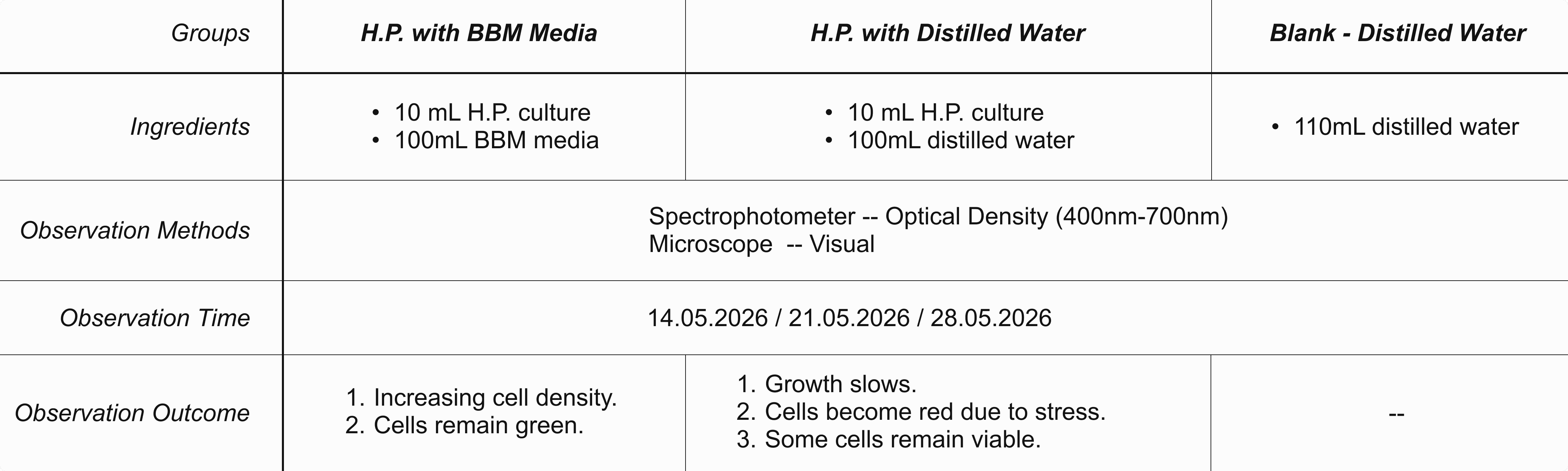
Cells in BBM remained denser and predominantly green, while those in distilled water showed slower growth and increased orange-red pigmentation.


H. pluvialis in BBM

H. pluvialis in Distilled Water
The results indicate that algal colour reflects environmental conditions: favourable conditions support green vegetative growth, while nutrient limitation and other stresses trigger protective pigment accumulation and a shift toward red.
The experiment examined how environmental conditions influence algal colour and viability. It showed that colour change can act as a visible indicator of stress and care conditions.
This finding guided the design toward a care-based interaction system, translating the algae’s needs into everyday actions involving light, temperature, movement, and maintenance.
Designing for Care


Interactive Prototype
To make relationships tangible, the project developed an Arduino-based prototype that monitors key cultivation conditions and records routine care activities.
Using a XIAO ESP32-S3 as the controller, sensor inputs are translated into visual feedback, reminders, and LED behaviour, helping users recognise when attention is needed and respond more consistently to the living culture.
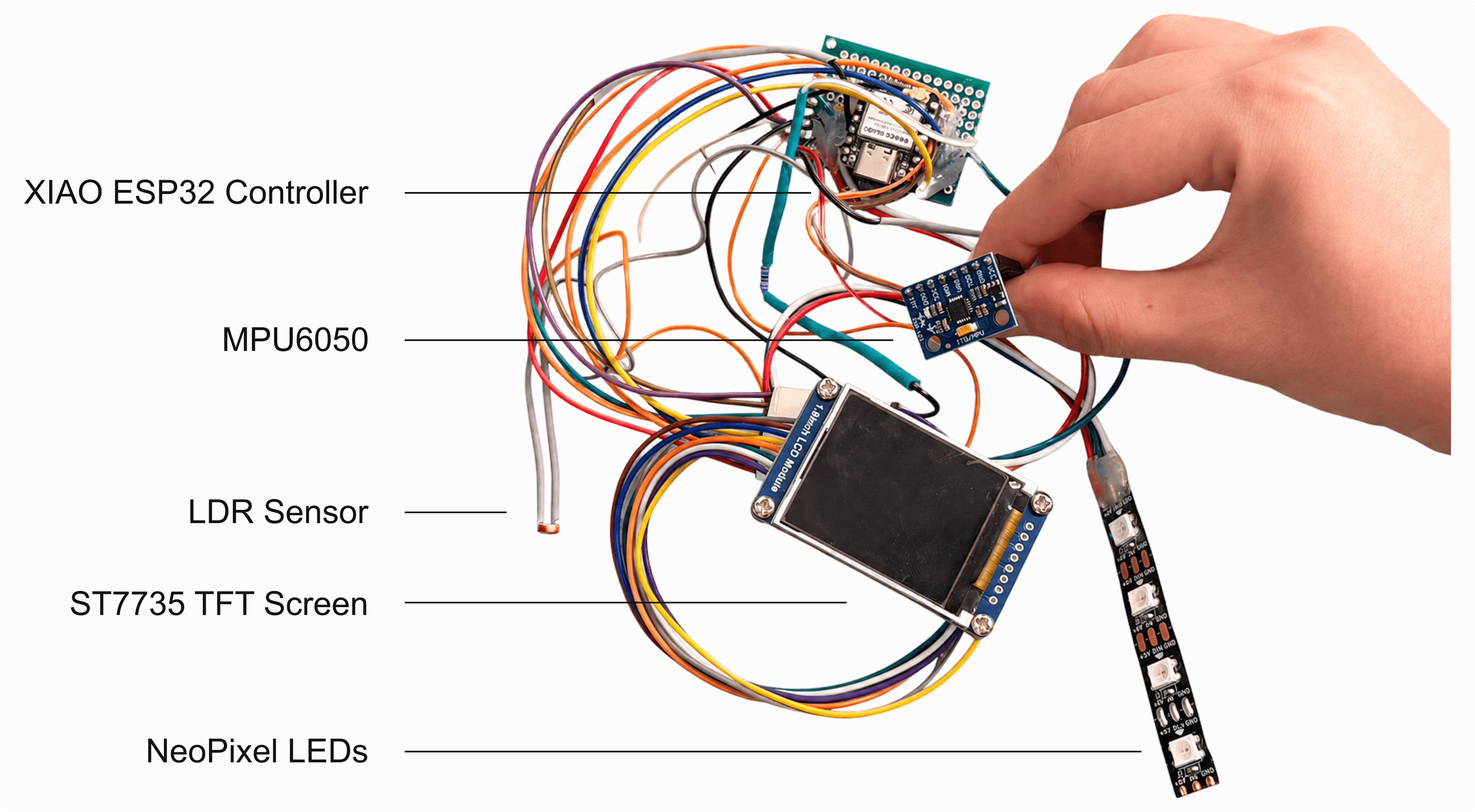
The system follows a simple input–processing–output structure to turn environmental readings and recorded care activities into understandable guidance. Sensor inputs are compared with predefined care thresholds, then translated into screen prompts and LED behaviour, allowing users to respond without interpreting raw data.